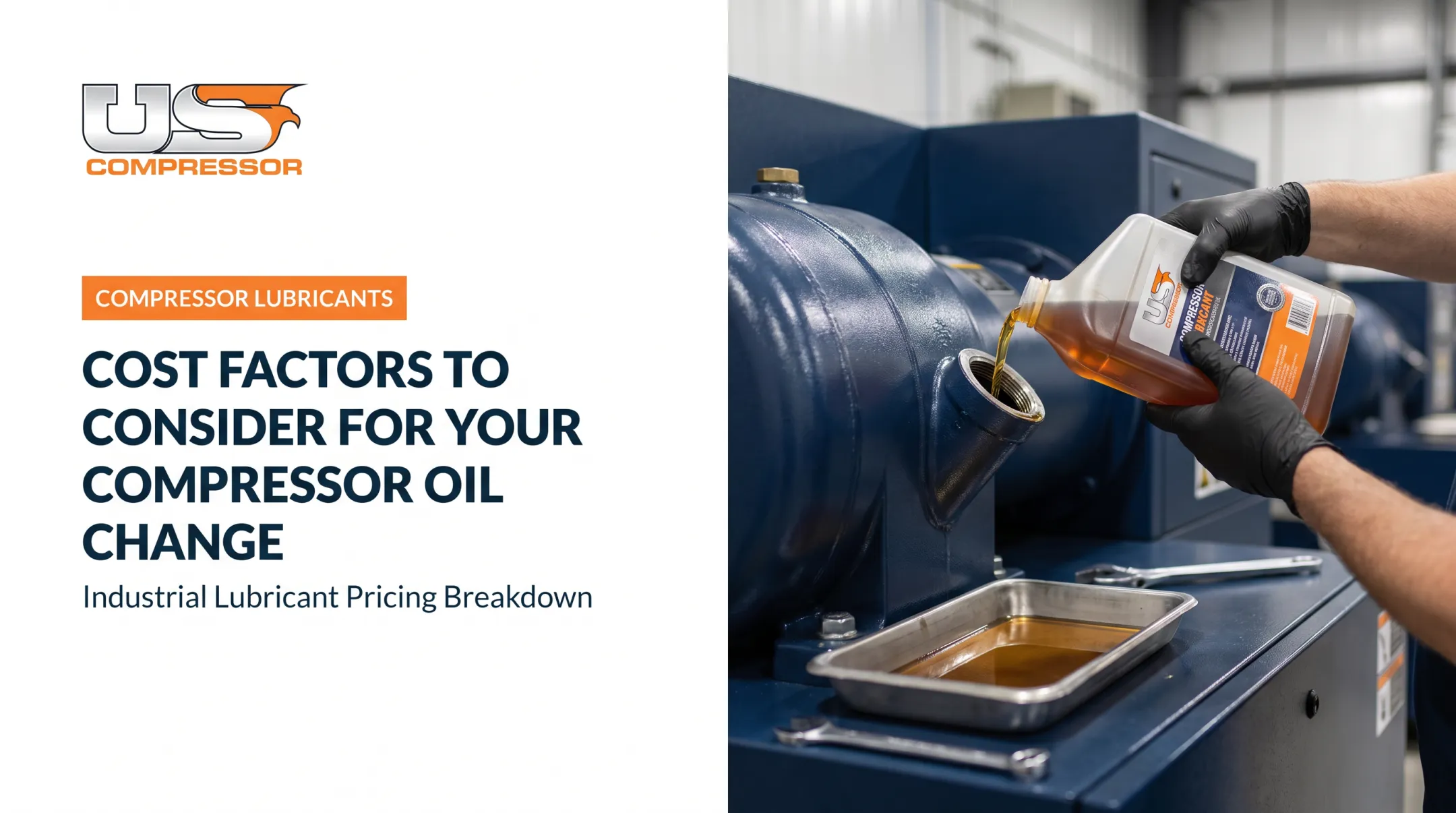

Mismatched or degraded oil is one of the most common causes of premature compressor failure. Moisture contamination, acid formation, and viscosity breakdown often trace back to a lubricant that didn't match the refrigerant or the operating conditions. Regular oil changes, done with the correct oil, are cheap insurance against expensive failures.
This guide covers the main oil types, how to choose correctly, top options for your next oil change, and a step-by-step change procedure.
Key Takeaways
- POE, PAG, PAO, AB, and mineral oils each suit different refrigerants and temperature ranges. None are interchangeable
- Wrong oil choice risks acid formation, viscosity breakdown, and compressor failure
- OEM-matched or OEM-equivalent oils, changed on schedule, extend compressor life and protect efficiency
- Match oil chemistry to the refrigerant first, then run a full drain-and-refill on schedule
Overview of Refrigeration Compressor Oils in the US Industrial & HVAC/R Market
Refrigeration compressor oil is a specialized lubricant. It reduces friction and wear inside the compressor, helps seal moving components, and needs to stay chemically compatible with whatever refrigerant is circulating through the system. Get that compatibility wrong, and you're not just losing lubrication. You're risking corrosion and acid formation inside the entire circuit.
There isn't a single reliable public figure for how much US lubrication failures cost refrigeration operators each year. What is well documented is the mechanism: Danfoss notes that POE oil reacts with moisture to form acid and alcohol, while Copeland points to moisture control and filter-driers as the frontline defense against hydrolysis and corrosion.
Moisture is the enemy, and oil selection is your first layer of protection.
Whether you're running rotary screw, reciprocating, or scroll compressors, the oil has to match the refrigerant and the OEM specification. Below is a breakdown of the top refrigeration compressor oils available to US operators, organized by chemistry type.
Top Refrigeration Compressor Oils for Your Oil Change Needs
Selection comes down to five factors:
- Refrigerant compatibility
- OEM specifications
- Thermal and chemical stability
- Availability
- Support, including technical guidance and free oil analysis
Talon Replacement Refrigeration Lubricants (US Compressor)
Talon lubricants are blended in an ISO 9001:2008-certified facility and distributed by US Compressor, a family-owned industrial lubrication supplier with more than 12 years in the business. The lineup spans POE, PAG, alkylbenzene, and mineral-compatible formulations across ISO grades 32 through 220.
What sets Talon apart:
- 100% Product Match Guarantee on OEM cross-reference replacements
- Formulations that are 100% OEM compatible or exceed OEM specs
- Free oil analysis with lubrication purchases, plus a product finder for matching fluids
- Direct phone access to lubrication experts at 800.973.3196
| Category | Details |
|---|---|
| Compatibility | Formulated to match OEM specs across POE, PAG, alkylbenzene, and mineral-based oils |
| Support Offerings | Free oil analysis, expert blending guidance, fast delivery for screw, reciprocating, and scroll compressors |
| Best For | Operators needing an exact OEM-equivalent replacement with technical backup |

RPE 32 (ISO 32) suits HFC and blended refrigerants. RPE 46 offers a -50°F pour point for low-temperature operation and longer drain intervals—examples of the range across viscosity grades.
POE (Polyol Ester) Based Refrigeration Oils
POE is the industry-standard synthetic lubricant for HFC refrigerant systems. Copeland specifies POE for R-134a and R-410A scroll compressors. Mineral oil is not permitted as an alternative because it will not stay miscible with these refrigerants.
| Category | Details |
|---|---|
| Refrigerant Compatibility | HFC refrigerants such as R-134a and R-410A |
| Temperature Range | Wide operating range, good high-temperature stability |
| Key Consideration | Hygroscopic — requires careful moisture control during handling |
Talon's AZ30167 uses friction modifiers and anti-wear additives that bond to metal surfaces, delivering chemical and thermal stability alongside energy savings. National Refrigerant Inc PE68 and RENISO TRITON SEZ 46 round out the POE lineup for HFC systems, both listed as 100% OEM compatible.
Handling tip: POE absorbs moisture quickly once a container is opened. Keep drums sealed, minimize open-air exposure, and replace the filter-drier whenever the circuit is opened.
PAG (Polyalkylene Glycol) Refrigeration Oils
Where ammonia or select CO2 systems are in play, PAG oils are the usual fit. Their high viscosity index helps maintain a stable oil film even at elevated temperatures.
| Category | Details |
|---|---|
| Refrigerant Compatibility | Ammonia and select CO2 systems |
| Moisture Behavior | Strongly hygroscopic — requires sealed handling |
| Best For | Industrial ammonia refrigeration plants |
Talon's PGWI 100 is an ISO 100 PAG lubricant compatible with propane, butane, and ammonia, with a pour point of -47°F and a free oil analysis support included. PGWI 68 carries a viscosity index of 199 and moisture content below 0.5%, delivering strong film strength for ammonia systems.
PAO (Polyalphaolefin) Refrigeration Oils
PAO is a synthetic oil with a mineral-oil-like molecular structure, known for low-temperature fluidity in ammonia and CO2 compressors. It is a strong option for screw compressors running near their application limits.
| Category | Details |
|---|---|
| Temperature Range | Strong low-temperature performance; verify exact product data sheet |
| Miscibility | Often low with refrigerants; sometimes blended with alkylbenzene |
| Best For | Low-temperature industrial and specialty refrigeration systems |
Because PAO miscibility varies by product, always confirm the exact technical data sheet against your compressor's oil-return design before switching.
Alkylbenzene (AB) Refrigeration Oils
For legacy HCFC equipment, alkylbenzene (AB) oils remain relevant. These synthetic aromatic lubricants were historically paired with refrigerants like R-22. They offer solid thermal and chemical stability and blend well with mineral oils and PAO, which keeps them flexible on older systems.
| Category | Details |
|---|---|
| Refrigerant Compatibility | HCFC systems (separates from HFC refrigerants) |
| Temperature Range | -40°C to 150°C (-40°F to 302°F) |
| Key Consideration | Requires full system flushing when switching from mineral oil |

With R-22 production and import barred since 2020, AB oils now mostly serve legacy equipment still running on existing refrigerant stock. Talon's ALKYL 500 covers this niche within the replacement lineup.
How We Chose the Best Refrigeration Compressor Oils
The biggest mistake operators make is assuming all synthetic oils are interchangeable, or skipping refrigerant compatibility checks entirely. They're not the same, and skipping that step is how acid formation and viscosity breakdown start.
We weighted these oils on:
- OEM approval and cross-reference accuracy
- Thermal and chemical stability under real operating loads
- Moisture resistance and handling requirements
- Access to technical support and free oil analysis
Each factor ties directly back to uptime and total cost of ownership — not just the price per gallon on the shelf.
How to Change Refrigeration Compressor Oil the Right Way
A correct oil change protects bearings, seals, and refrigerant purity. Work through these steps in order.
- Isolate and relieve pressure. Close the discharge and suction valves, then open the crankcase access valve to relieve pressure safely. Federal regulations require evacuating or pressurizing to no higher than 5 psig before opening the system.
- Drain the old oil completely. Open the drain connection and empty the crankcase fully. Clean or replace the oil filter screen to remove sludge and metal debris.
- Inject new oil using the method for your compressor type: process port for screw compressors, vacuum suction for piston compressors. Fill to the recommended sight glass level.
- Pull and hold a system vacuum to remove residual air and moisture before restoring the refrigerant charge.
- Leak-test and start the unit. Check oil level and oil pressure against the manufacturer's specified range before returning to normal operation.

Skipping any of these steps, especially the vacuum hold, is a common way moisture sneaks back into a freshly oiled system.
Conclusion
The right refrigeration compressor oil matches your refrigerant, compressor type, and operating conditions—not brand popularity alone.
Track oil condition through periodic sampling and follow manufacturer-recommended change intervals rather than waiting for warning signs like discoloration or reduced cooling. By the time you notice trouble, the damage is often already underway.
Need help selecting the right lubricant? US Compressor offers free oil analysis, expert guidance, and Talon replacement lubricants backed by a 100% match guarantee. Call 1-800-973-3196 or reach out at Info@USCompressor.Com.
Frequently Asked Questions
What type of oil is used in a refrigeration compressor?
POE oil is most common for HFC refrigerants, while PAG and hydrotreated oils suit ammonia systems. PAO or AB oils fit select low-temperature or legacy applications. Always check the OEM specification first.
How do I know if my AC compressor needs oil?
Watch for a sight glass reading below the recommended level, unusual compressor noise, or reduced cooling performance. Oil that looks dark, cloudy, or smells acidic is also a red flag.
How often should refrigeration compressor oil be changed?
Intervals vary widely by compressor model — some manuals call for an initial check at 100-200 hours, then every few years or several thousand hours after that. Always follow your specific OEM manual rather than a generic rule.
Can different types of refrigeration oil be mixed?
Generally, no. Mixing oil types, such as mineral with synthetic ester, can degrade lubrication performance and disrupt chemical stability throughout the system.
What happens if you use the wrong refrigeration oil?
You risk poor refrigerant miscibility, viscosity breakdown, and acid formation inside the compressor. Left unaddressed, these issues lead to premature compressor failure.
Is refrigeration oil the same as compressor lubricant?
Yes, the terms are typically used interchangeably. Both refer to the specialized lubricant formulated for compatibility with a specific refrigerant and compressor design.