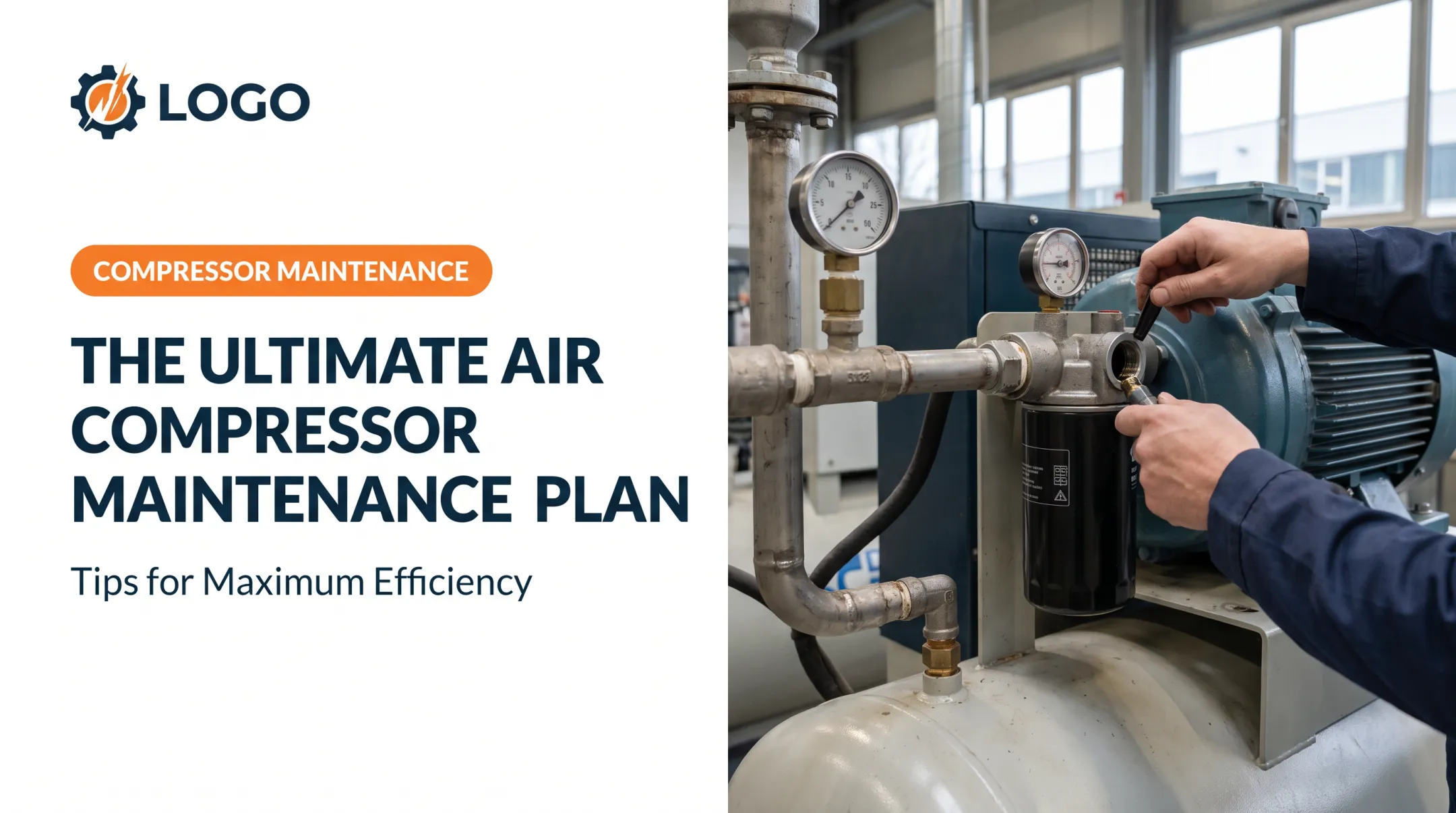

Poor maintenance doesn't just mean an inconvenient breakdown. It means unplanned downtime, climbing energy bills, premature air-end wear, and safety risks from overheating or pressure buildup. This checklist covers the maintenance types you need to know, the warning signs that precede failure, a full task schedule, lubrication essentials, and the mistakes that trip up even experienced operators.
Key Takeaways
- Daily, weekly, monthly, and annual oil, filter, and separator checks prevent most failures
- Preventive maintenance costs far less than reactive breakdowns and emergency downtime
- Discolored oil, rising temperatures, unusual noise, and oil carryover are early warning signs
- A documented schedule plus OEM-compatible lubricants extends air-end life
- Free oil analysis catches contamination and wear before they cause failure
Why Maintenance of Oil-Lubricated Air Compressors Is Important
Compressors are one of the most heavily used utilities in industrial plants. Consistent maintenance keeps total cost of ownership manageable over the compressor's working life. Performance and efficiency: Degraded oil loses its viscosity and lubricating properties, forcing the air end to work harder. Clogged filters restrict airflow, driving up energy consumption for the same output. Both problems raise energy use without an obvious alarm. Equipment lifespan: Contaminated oil and worn filtration accelerate wear on rotors, bearings, and seals. What should be a decades-long asset can turn into a premature air-end replacement. Safety and air quality: Overheating from degraded lubrication increases pressure-related risks, and pressure relief valves need to function correctly when things go wrong. Poor oil control can also mean carryover into your compressed air lines, compromising product or process quality downstream.
The Cost Case for Prevention
Those same gaps show up on the balance sheet:
- US Department of Energy estimates put predictive maintenance savings at 8%–12% versus preventive maintenance alone
- Broader industrial data suggests planned maintenance can cut costs 25%–30% and reduce downtime 35%–45%
- ABB's 2023 survey found unplanned industrial downtime averaging $125,000 per hour Your site's exact downtime cost will differ, but scheduled inspection and oil control still move expensive failures into planned maintenance windows.

Types of Maintenance for Oil-Lubricated Air Compressors
Maintenance strategy isn't one-size-fits-all. It depends on your compressor type (rotary screw, piston, or vane) plus your duty cycle and operating environment.
Routine / Preventive Maintenance
This is calendar-based work done regardless of visible symptoms:
- Check oil level and drain condensate daily
- Inspect and clean air filters
- Tighten fasteners and check belts
This level of care is enough for compressors running under normal, moderate-duty conditions.
Corrective / Reactive Maintenance
Triggered by leaks, unusual noise, or a noticeable drop in performance. This approach works, but it's expensive. Relying on it means accepting unplanned downtime and higher maintenance costs compared to planned maintenance.
Predictive / Condition-Based Maintenance
This tracks oil condition, temperature, and vibration data over time instead of waiting for a calendar date. US Compressor's free oil analysis program supports this approach. Lab results can flag varnish, contamination, or wear metals before they cause an air-end failure, giving you a warning window that a visual inspection alone won't provide.
Major / Overhaul Maintenance
Air-end rebuilds or full component replacement, typically required after reaching manufacturer-specified hour intervals or when oil analysis reveals critical wear. This is planned, not reactive. The OEM manual and your oil analysis history should drive the timing, not guesswork.

How to Check If Your Oil-Lubricated Air Compressor Needs Maintenance
Catch these early warning signs before they escalate into major failure:
- Reduced pressure output, slower fill times, or higher energy use for the same workload
- Abnormal noise, knocking, vibration, short-cycling, or unexpected shutdowns
- Oil that looks dark, milky, or smells burnt (contamination or overheating)
- Oil carryover into compressed air lines or visible leaks around seals
- Minor issues that keep returning after temporary fixes
- Rising need for manual resets between scheduled maintenance
Varnish is one of the leading causes of oil-injected rotary-screw air-end failure. Plugged filters or an unexplained rise in discharge temperature are late-stage indicators, according to Compressed Air Best Practices' analysis of rotary-screw varnish formation. By the time you see it visually, you're already behind.
None of these signs alone confirms a diagnosis. Treat them as prompts to investigate — check temperatures, inspect for leaks, and pull an oil sample.

Oil-Lubricated Air Compressor Maintenance Schedule
Intervals vary by manufacturer, compressor type, and usage. Always defer to your OEM manual first. This table reflects general industry guidance.
| Frequency | Tasks |
|---|---|
| Daily | Check oil level, drain condensate, inspect for leaks and unusual noise |
| Weekly | Inspect air filter and oil breather |
| Monthly/Quarterly | Test pressure relief valve, inspect belts and vibration pads |
| Annual/Long-term | Change oil, replace oil filter and separator elements, run oil analysis |
Oil life varies by product and duty. Rotary-screw oils can run 3,000 to 8,000 hours depending on operation.
Some premium synthetics, like Talon S 46, deliver 4,000–6,000 hours at 212°F discharge temperature. Reciprocating compressors typically need quarterly changes with mineral oils.
Environment shortens these intervals fast:
- Dusty environments clog filters faster and demand more frequent inspection
- High humidity accelerates moisture contamination in the oil
- Continuous-duty operation wears components faster than intermittent use
- High ambient temperature shortens oil life across the board
If your facility runs hot, dusty, or around the clock, don't wait for the calendar. Let oil analysis results and temperature trends set your actual interval.

Oil and Lubricant Selection: A Critical Maintenance Factor
Following the schedule means nothing if you're using the wrong oil. Match viscosity to your compressor type:
| Compressor Type | Typical Viscosity |
|---|---|
| Rotary screw | ISO VG 32, 46, or 68 |
| Piston, vane, reciprocating | ISO VG 100 |
| Not all fluids are interchangeable, and mismatched or incompatible oils can: |
- Cause varnish buildup that clogs filters and damages the air end
- Damage seals not rated for the oil's chemistry
- Void manufacturer warranties tied to specific lubricant approvals
ABAC's guidance on oil and lubrication issues notes that an unsuitable substitute can cause foaming and poor separation, driving up oil carryover into your air lines.
US Compressor's Talon replacement lubricants are formulated to match OEM specifications, backed by a 100% product match guarantee. That means less guesswork when you're sourcing a replacement oil for a machine that's no longer under the original manufacturer's coverage.
Pair every oil change with an oil sample. A free oil analysis alongside your scheduled change confirms the new lubricant is performing as expected and catches contamination early, before it turns into an air-end problem.
Conclusion
Oil-lubricated compressor maintenance directly drives uptime, energy costs, and how long your equipment lasts before a major rebuild. A structured schedule, matched with the right lubricant and genuine replacement components, protects the value of the asset you've already paid for.
Use this checklist as a living reference, not a one-time read. When questions come up about lubricant compatibility, oil analysis, or product selection for a rotary screw, piston, or vane compressor, US Compressor can help with technical guidance, free oil analysis, and a product finder.
Frequently Asked Questions
Which is better, oil-free or oil-lubricated air compressors?
Oil-lubricated units handle heavy-duty, continuous industrial work at lower upfront cost, but need regular oil and filter maintenance. Oil-free models suit air-purity-sensitive jobs and need less lubrication upkeep, yet usually cost more and wear faster under heavy loads.
How often should oil be changed in an oil-lubricated air compressor?
Reciprocating compressors generally need quarterly changes. Rotary-screw units can run 3,000–8,000 hours depending on the oil and operating conditions. Always confirm the interval in your OEM manual and lubricant data sheet.
How do I know if my oil-lubricated air compressor needs oil?
Check the sight glass or dipstick daily, ideally after the unit has been running. Low oil can signal leaks or excessive carryover—investigate the cause rather than just topping it off.
How often should an oil-lubricated air compressor be serviced?
Daily: oil level, condensate, and leaks. Weekly: filters and breathers. Monthly or quarterly: relief valves and belts. Annual maintenance covers oil changes plus filter and separator replacement.
What happens if I use the wrong compressor oil?
Wrong viscosity or chemistry can cause varnish buildup, seal damage, foaming, and higher oil carryover into air lines. Non-approved lubricants can also void the manufacturer's warranty.
How long does an oil-lubricated air compressor typically last with proper maintenance?
With consistent preventive maintenance, many units reach 20–30+ years of operation, and some air ends last over 40 years. Actual lifespan depends heavily on duty cycle and lubrication discipline.