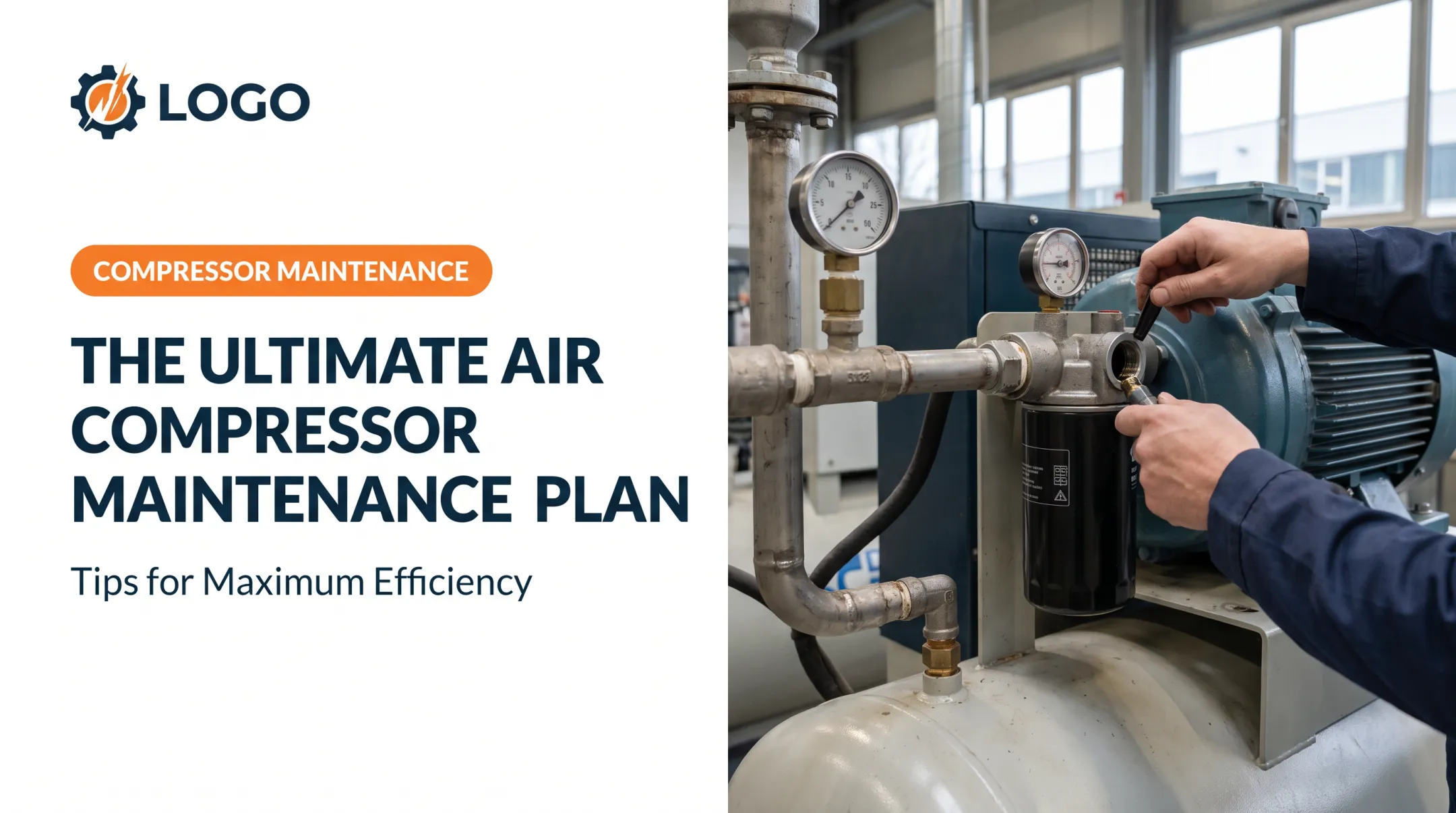

Maintenance costs swing widely depending on compressor type, age, and what actually failed. A blown gasket on a reciprocating unit is a different animal than a rotary screw air end that's seized. This article breaks down what drives those costs, what typical overhauls actually involve, and a practical framework for deciding when to fix it versus replace it.
Key Takeaways
- Maintenance costs scale with what failed, not the compressor's price tag alone
- Age, component sourcing, and labor conditions push costs up fast
- If maintenance costs approach 50% of a replacement or rebuild, replace instead
- Downtime cost often exceeds the maintenance invoice itself
- Oil analysis and correct lubrication catch problems before major maintenance bills hit
How Much Does Air Compressor Overhaul Cost? (Pricing Overview)
Maintenance cost depends almost entirely on what broke. A simple component swap and a full air end rebuild aren't comparable, so a single average number isn't useful.
Common budgeting mistakes:
- Underestimating downtime cost while fixating on the maintenance invoice
- Skipping the rebuild-vs-replace comparison entirely
- Not checking OEM component availability before committing to a maintenance timeline
There's no single published national price table for compressor overhauls, and any distributor number should be treated as an example quote, not a benchmark. That said, overhauls generally fall into three tiers.
Minor Overhauls
Filter and gasket replacements, capacitor swaps, and minor electrical fixes. Best fit: compressors under 5–7 years old with a single isolated fault.
Typical component examples:
- Quincy air-intake filter: ~$17
- Cylinder plate gasket: ~$12.50
Components stay inexpensive; labor and diagnostics still apply.
Moderate Overhauls
Motor or bearing replacement, pressure switch issues, and control board failures. Best fit: mid-life compressors (5–10 years) with a solid maintenance history.
Example component range:
- Valve kit replacement: ~$290–$300 before labor
Major Overhauls / Air End Rebuild
Full air end rebuild or replacement, plus complete overhaul kits. Best fit: units that are structurally sound but have lost a core component.
Example component range:
- Larger rotary screw overhaul kit: often $800+ in components alone
- Gardner Denver-compatible overhaul kit: from ~$844
Note: These figures typically cover components and labor only. They exclude downtime cost and emergency callout premiums—both of which can dwarf the invoice itself.

Key Factors That Affect Air Compressor Overhaul Cost
Maintenance cost usually hinges on five things: compressor type, age and maintenance history, how bad the failure is, component lead time, and labor conditions.
Type of Compressor
Rotary screw air end rebuilds usually cost more because of the precision machining involved. Reciprocating (piston) overhauls are typically less expensive per job, though these units can need maintenance more often. Vane compressors land in between, depending on the failure mode.
Age and Usage History
Older units with a spotty lubrication or maintenance history tend to fail in clusters — one problem exposes another. That compounding effect is what turns a $500 overhaul into a $2,500 one.
Severity and Cause of Failure
- Wear-and-tear issues (bearings, seals, valves): lower cost and easier to forecast
- Contamination or lubrication-related damage: mid-to-high cost; may spread beyond the first failed component
- Catastrophic failures (burnout, seized air end): highest cost, often pushing a full air end replacement instead of a overhaul
Component Availability and OEM vs Aftermarket
Sourcing rebuild kits, air ends, or OEM-compatible components quickly has a direct effect on both cost and downtime. A reliable component supplier shortens that window considerably. Alongside that components path, US Compressor helps operators stay ahead of failures with OEM-matched lubricants, free oil analysis, and a product finder that makes it easier to select the right fluid for rotary screw, piston, vane, and reciprocating platforms.
Labor and Emergency Maintenance Rates
After-hours or emergency callout calls raise labor costs quickly. Site-specific factors — tight access, oversized equipment, remote locations — add technician time on top of that.
Lubrication and Fluid Quality
Improperly blended or incompatible lubricants accelerate wear on internal components, which raises how often you're paying for overhauls in the first place. Matching the correct lubricant to the compressor is one of the simplest ways to keep overhaul frequency—and total cost—under control.

Overhaul Cost Breakdown by Component
Total maintenance cost is the sum of several line items, not just the price of the failed component.
| Cost Component | Type | Description |
|---|---|---|
| Diagnostics and inspection | One-time | Technician time to isolate the failure point |
| Replacement components | One-time/periodic | Scales from a filter kit to a full air end rebuild kit |
| Labor (teardown, overhaul, reassembly) | One-time | Varies by compressor complexity and technician rates |
| Lubricant and fluid replacement | Recurring | Often overlooked, but necessary after internal maintenance work |
| Downtime cost | Situational | Lost production hours, frequently exceeding the maintenance invoice |
Components and labor show up on the invoice. Downtime often does not, and lost production can exceed the overhaul charge itself.
Free oil analysis from suppliers like US Compressor can flag developing issues before they become full component failures. Catching problems early cuts diagnostic time and unplanned downtime.

Rebuild vs Replace — How to Decide
The right call depends on more than just the number on the maintenance quote.
The 50% Rule
A common operator heuristic: if the maintenance cost approaches roughly 50% of a comparable new or rebuilt unit's price, replacement is usually the smarter investment. This isn't an official industry standard, but it works well as a screening flag to trigger a deeper comparison.
Age and Remaining Maintenance Life
Compressors have a practical maintenance window tied to hours run, duty cycle, and maintenance history — not just calendar age. Overhauls on a unit nearing the end of that window rarely pay for themselves.
Frequency of Past Overhauls
One breakdown is bad luck. Three breakdowns on the same unit in eighteen months is a pattern. Recurring failures usually mean it's time to stop patching and start planning a replacement.
Availability of Rebuild Kits and Components
When overhaul kits and rebuilt air ends are readily available, rebuilding can extend a compressor's life affordably. US Compressor supports that decision with OEM-matched lubricants, free oil analysis, and a product finder so operators can keep lubrication on-spec while evaluating whether a rebuild still makes sense.
Production Impact and Criticality
If the compressor feeds a continuous operation, a faster overhaul may be worth the premium simply to avoid extended downtime. Context matters more than the invoice total.

What Most Operators Miss When Budgeting for Overhauls
The maintenance invoice is only one line item. These oversights often drive the real total higher:
- Focusing only on the maintenance invoice while ignoring downtime — unplanned downtime hits 55% of US manufacturers annually, with some incidents averaging $400K per hour
- Skipping oil analysis, which catches developing failures before an expensive breakdown
- Using incompatible or low-quality lubricants that shorten component life and trigger repeat failures
- Skipping rebuilt or replacement air-end quotes before locking in a maintenance path
Conclusion
Air compressor maintenance costs vary significantly based on compressor type, failure severity, and age — there's no single number that applies across the board. Applying the 50% rule alongside a realistic downtime estimate leads to a much smarter overhaul-or-replace call.
And preventive habits—oil analysis, correct lubricant matching, and disciplined maintenance planning—reduce how often you're forced to make that decision at all. When you need compatible lubricants, a free oil analysis, or help using the product finder to stay ahead of failures, a knowledgeable lubrication partner can keep that decision off your plate longer.
Frequently Asked Questions
How much does it cost to maintenance or overhaul an air compressor?
Minor fixes like filters or gaskets typically run $150–$800. Moderate overhauls such as motors or bearings fall around $800–$2,500. Major work like air end rebuilds can reach $2,500–$7,000+. Always get a model-specific quote.
Should I rebuild or replace my air compressor?
Use the 50% rule as a starting point: if maintenance costs approach half of a replacement unit's price, replacement often makes more sense. Factor in the unit's age, remaining operating life, and how often it has broken down recently.
How many years should an air compressor last?
Maintenance life depends more on operating hours, duty cycle, and maintenance history than calendar age. A well-maintained rotary screw or reciprocating unit can run for decades; a neglected one fails much sooner.
How often should an air compressor be serviced?
Most manufacturers recommend a formal maintenance visit every 2,000 operating hours or annually, whichever comes first. Harsh environments (dust, heat, heavy duty cycles) may call for maintenance every 1,000 hours instead.
Can you fix a broken air compressor?
Most failures are rebuildable if caught early. Worn valves, gaskets, and bearings are routine fixes. Catastrophic failures like contamination or burnout often require a full air end replacement instead.