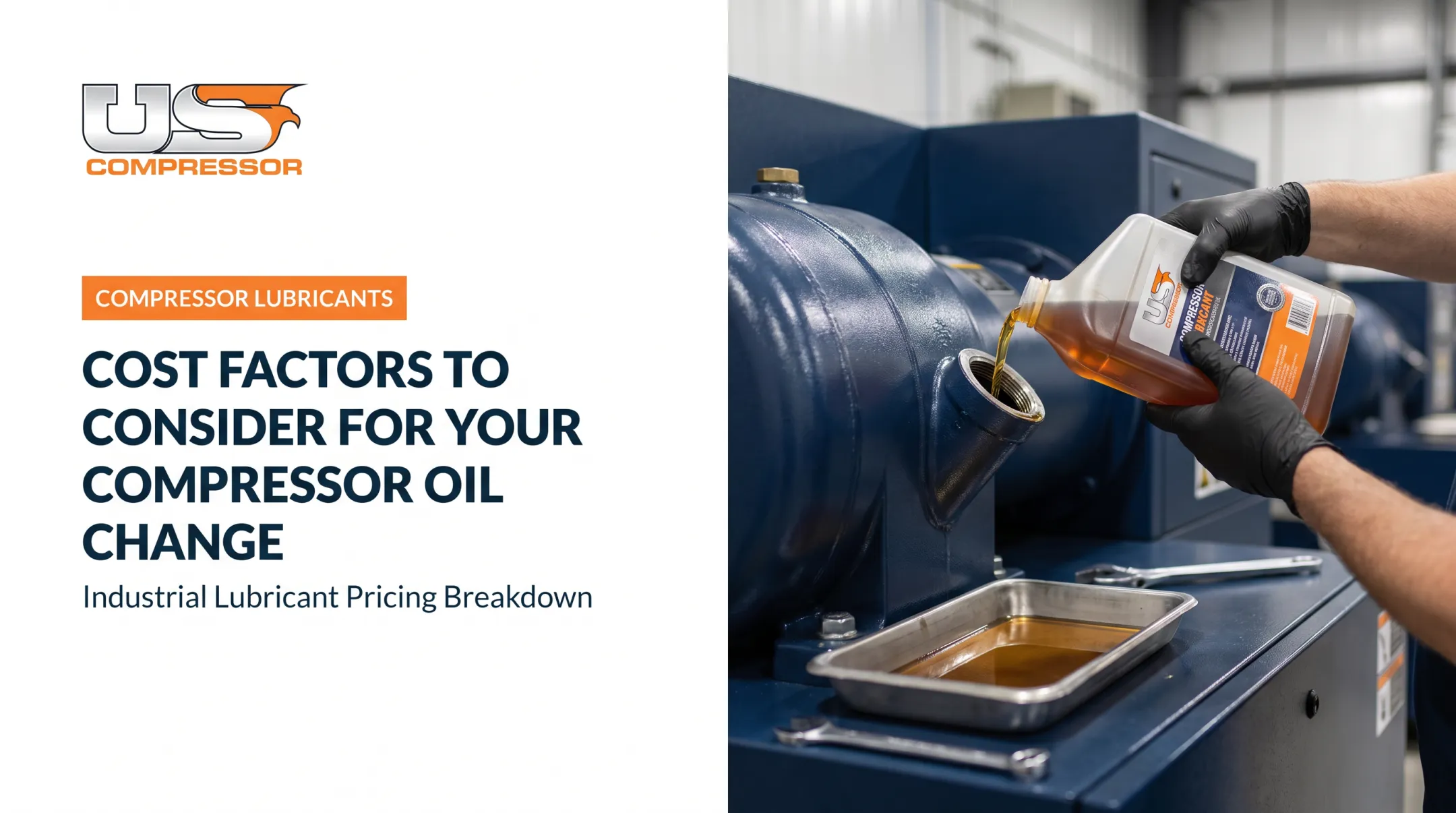

Skipping oil changes doesn't save money. It just delays the bill and makes it bigger. This guide covers why oil changes matter, the warning signs to watch for, how to pick the right oil, a step-by-step change process, and a realistic schedule you can actually follow.
Key Takeaways
- Oil protects pistons, cylinders, and valves from friction, wear, and heat buildup
- Change frequency typically falls between 100 and 500 operating hours, but always defer to your OEM manual
- Matching viscosity and oil type to OEM specs matters as much as timing
- A safe, step-by-step process prevents contamination, injury, and rework
- Free oil analysis removes the guesswork by showing actual oil condition instead of hour-based estimates
Why Oil Changes Matter for Reciprocating Compressors
Oil quality is directly tied to how long your compressor lasts. Reciprocating compressors need lubricant specifically formulated to protect pistons, rings, and bearings under repeated mechanical stress. Talon Brand air compressor lubricants, for example, are formulated for thermal stability and protection against wear, rust, and corrosion in piston and reciprocating equipment.
When oil degrades, it stops doing its job. Discharge valves exposed to high temperatures can carbonize surrounding oil, causing leakage. Broken-down oil mixed with dust can form sludge on valve plates, and acidic, stale lubricant can damage valve metal over time, according to Quincy Compressor's valve failure guidance.
That same degradation raises safety risk. On gas and refrigeration compressors, an unplanned failure isn't just downtime—it can become a genuine hazard when the compressed medium is flammable or pressurized.
The Cost of Skipping Maintenance
The cost contrast is straightforward:
- Scheduled oil, sampling, and labor costs stay predictable
- Emergency valve, piston, or cylinder overhauls do not
- Downtime costs climb fast once a failure cascades
US Compressor customers who pair the right lubricant with consistent oil changes often reduce total lubrication spend versus running to failure—without waiting on emergency components and unplanned labor.

Signs Your Reciprocating Compressor Needs an Oil Change
Catching problems early keeps small issues from becoming expensive ones. Here's what technicians should watch.
Oil Appearance and Condition
Check the oil through the sight glass regularly:
- Milky or cloudy oil often signals moisture contamination
- Dark, gritty, or sludgy oil may indicate metal particles or oxidation
- Low level between checks could point to a leak worth investigating
Color alone isn't a definitive diagnosis. Treat unusual appearance as a flag to sample and test, not an automatic conclusion.
Performance and Operational Changes
Watch your gauges and your ears:
- Rising operating temperature or pressure outside normal range
- Knocking, vibration, or unusual valve noise from lubrication breakdown
- Weak discharge or abnormal suction pressure, which Quincy identifies as a valve-failure clue
Usage-Based Indicators
Track hours against your manufacturer's recommended interval, but remember:
- Continuous-duty operation degrades oil faster than intermittent use
- Hot, dusty, or humid environments accelerate breakdown
- Hour-meter tracking is useful, but it's still a proxy, not a certainty
When hours alone aren't enough, US Compressor's free oil analysis checks the oil's actual condition so you know whether it's still serviceable or needs replacing.
Choosing the Right Oil for Your Reciprocating Compressor
Reciprocating compressors need oil built for piston-type equipment. Generic motor oil won't cut it; it lacks the anti-foaming, anti-oxidation, and thermal-stability properties reciprocating units demand.
Key Selection Factors
- Viscosity grade: Most reciprocating units run ISO 68 or ISO 100, based on application and discharge temperature.
- Synthetic vs. conventional: Synthetic ester oils handle severe, high-temperature maintenance better; conventional oils suit standard-duty use.
- OEM compatibility: The wrong chemistry, even at the right viscosity, can cause seal damage or other compatibility problems.
Don't select oil by viscosity number alone. Chemistry, seal compatibility, and the compressed medium all factor into the right choice.
Why OEM-Matched Lubricants Matter
Using OEM-matched or equivalent lubricants helps maintain warranty compliance and consistent performance. Talon replacement lubricants carry a 100% product match guarantee for OEM product-to-product replacements and pour-over compatibility. That guarantee is backed by a documented cross-reference guide. Not every fluid combination is compatible, so it's worth confirming before you pour anything new into the crankcase.
How to Change Oil in a Reciprocating Compressor: Step-by-Step
Safety comes first. Depressurize the unit, lock out the power source, and follow your site's lockout/tagout procedure before touching anything.
Tools you'll need:
- Drain pan
- Wrench or socket set
- Funnel
- Clean rags
- Replacement oil (correct type and viscosity)
- Replacement filter, if applicable
Draining the Old Oil
- Locate the drain plug and position your drain pan underneath it.
- Loosen the plug fully and let the oil drain completely. Don't rush this step.
- Inspect the drained oil for metal particles, water, or unusual color before discarding it.
Filter and Seal Inspection
If your unit uses a filter or element, replace it now. Check O-rings and seals for cracking, hardening, or wear before reassembly. A worn seal on a fresh oil change is a leak waiting to happen.

Refilling and Final Checks
- Fill with the correct oil type and viscosity to the level indicated on the sight glass.
- Tighten the fill cap and drain plug to manufacturer spec, not just "snug."
- Run the compressor and monitor for leaks.
- Verify pressure and temperature readings return to normal ranges.
After the change: Take a new oil sample whenever you add fresh lubrication. This establishes a baseline for future analysis. Rechecks within the first 10% of the oil's expected life help catch problems before they escalate.
Reciprocating Compressor Oil Change Schedule (General Guidelines)
Intervals vary based on duty cycle, load, and environment. There's no single number that fits every compressor, but here's a general framework:
| Task | Frequency |
|---|---|
| Oil level check | Daily |
| Oil change | Every 100-500 operating hours, or per OEM manual |
| Full inspection | Annually, alongside a scheduled oil change |
| Long-life synthetic change | Typically 1 year or 2,000 hours, whichever comes first |
Duty cycle pushes you toward one end of that range or the other:
- Light-duty, intermittent use: Often stretch toward the longer end of the interval
- Continuous industrial or gas maintenance: Change more often—sustained heat and load break oil down faster

Your compressor's manual is the final word here. General guidelines help you plan, but manufacturer specs override any generic table.
Final Thoughts
Consistent oil changes are one of the simplest ways to protect uptime and extend the life of your reciprocating compressor. The work is routine, but skipped intervals are what lead to costly failures and unplanned downtime.
Pairing scheduled changes with the correct OEM-matched lubricant, plus occasional oil analysis, gives the clearest read on compressor condition. US Compressor backs that up with lubricant selection guidance, free oil analysis for lubrication customers, fast delivery on replacement oils, and a product finder to match the right fluid.
Frequently Asked Questions
How often should you change the oil in a reciprocating compressor?
Oil change intervals typically range from every 100 to 500 operating hours, depending on manufacturer specs, usage intensity, and oil type. Always treat your owner's manual as the definitive source.
Does evacuating an AC system remove the oil from a reciprocating compressor?
No. Evacuation removes refrigerant and moisture from the system, not the crankcase oil. Oil removal requires a separate procedure through the drain plug or oil fill access.
What kind of oil should you use in a reciprocating compressor?
Reciprocating compressors need oil specifically formulated for piston-type equipment, not generic motor oil. Match the manufacturer-specified viscosity, typically ISO 68 or ISO 100, and confirm OEM compatibility.
Can you mix synthetic and conventional compressor oil?
No. Mixing can dilute synthetic properties and create compatibility problems. When switching oil types, a full flush is the safer route.
What happens if you don't change compressor oil regularly?
Expect accelerated wear, overheating, valve damage, and eventually compressor failure. Degraded oil loses its ability to lubricate and control heat, and that leads to larger mechanical failures.
How do you dispose of used compressor oil properly?
Check local and state regulations, and take used oil to an approved recycling center. Never pour it into regular trash, drains, or soil; federal used-oil rules require proper containment and handling.